
Hampton Bay
Hampton Bay is the kind of brand that earns its place in a home quietly and without fanfare. It doesn’t advertise on television or sponsor home renovation programs the way some competitors do. It doesn’t position itself as a premium lifestyle brand or charge prices that require deliberation. What it does — and has done consistently for decades — is show up reliably at The Home Depot in a range of styles, sizes, and price points that cover the vast majority of what residential ceiling fan buyers actually need, and it does so with enough consistency in quality and enough depth in parts availability that the fans it sells tend to stay in homes for a very long time. That longevity is both Hampton Bay’s greatest commercial strength and the reason so many people end up on a page like this one. A fan that lasts ten or fifteen years is a fan whose remote eventually gets lost, whose receiver eventually wears out, whose original pull chain system eventually gets upgraded by an owner who has finally decided that reaching up in the dark to tug a chain is not a reasonable way to operate a ceiling fan in the twenty-first century.
Hampton Bay is an exclusive Home Depot brand, which means you won’t find it at Lowe’s, at Costco, or at independent lighting showrooms. The Home Depot is the source, and that exclusivity has shaped the brand’s trajectory in interesting ways. On one hand it limits where you can buy a new Hampton Bay fan. On the other hand it has created a remarkably well-developed parts and support ecosystem anchored by Home Depot’s retail infrastructure, Hampton Bay’s own customer service line, and a large and active aftermarket of third-party suppliers who have recognized that the sheer volume of Hampton Bay fans installed across North America represents a permanent and substantial demand for compatible replacement parts. That aftermarket is particularly well-developed in the remote control category, which is why buyers looking for Hampton Bay remote replacements have more options available to them than buyers shopping for replacement parts for most other ceiling fan brands at comparable price points.
The products listed on this page represent a carefully selected range of Hampton Bay remote controls and compatible replacement options that address the most common needs Hampton Bay owners encounter. Whether you are replacing a lost or failed original remote, replacing a receiver that has stopped responding, adding remote capability to a fan that was installed without it, or simply trying to understand what your options are before spending any money, the selection here covers the situations that come up most frequently in practice. Each product includes a direct purchase link so you can get what you need without navigating through multiple retailer pages or trying to cross-reference compatibility information across several different sources.
Understanding the Hampton Bay Remote Control Ecosystem Before You Buy
Hampton Bay remote control systems consist of two components that work together: the handheld transmitter that you hold and point at the fan, and the receiver unit that lives inside the fan’s canopy and translates the transmitter’s radio frequency signal into electrical commands that control the fan speed, light, and direction. Both components need to be present and compatible with each other for the system to work, and understanding this two-component structure is the single most important piece of knowledge you can have before spending money on a replacement. Many buyers who end up frustrated with a remote that doesn’t seem to work have actually purchased the correct remote for their fan but haven’t matched the DIP switch settings between the remote and the receiver — a simple adjustment that resolves the problem immediately once you know to look for it. Others have replaced the remote when the actual failure was in the receiver, which means the new remote works perfectly but the fan still doesn’t respond because the component that was failing was never addressed. Understanding which component has failed before purchasing anything is always the right starting point.
DIP switches are the small physical switches — typically a row of four — found inside the battery compartment of Hampton Bay remote transmitters and on the body of the receiver unit inside the canopy. Both sides of the system need to have their DIP switches set to the same combination in order for the remote to communicate with the receiver. When you receive a replacement remote, it comes with the DIP switches in a default position that may or may not match the combination set on your existing receiver. If they don’t match, the remote will appear completely unresponsive — not because anything is wrong with it, but because the frequency pairing hasn’t been established. Setting the DIP switches on the new remote to match the receiver resolves this in most cases. To check the receiver’s DIP switch settings, turn off the circuit breaker for the fan, open the canopy, and look at the receiver unit — the switch positions are visible and easy to replicate on the new remote. This process takes about ten minutes from start to finish and is the single most common fix for a replacement remote that appears not to be working.
Radio frequency is the other technical specification worth understanding before purchasing. Hampton Bay remote systems operate at either 303.9 MHz or 433.92 MHz, and the transmitter frequency must match the receiver frequency for communication to occur. This specification is typically printed on the receiver label inside the canopy and should be listed in the specifications of any replacement remote you’re considering. Buying a remote that operates at the wrong frequency is one of the less common but most confusing compatibility problems, because the remote will behave exactly as though the DIP switches are mismatched even after you’ve confirmed they’re set correctly. Checking the frequency before purchasing takes thirty seconds and prevents a frustrating return.
The Hampton Bay Remote Products on This Page — What Each One Is and Who It’s For
The UC7083T is one of the most widely distributed Hampton Bay ceiling fan remote models, found across a large range of Hampton Bay fans and some Home Decorators Collection models sold through Home Depot. It handles three-speed fan control, light on and off, and direction reversal, making it one of the more fully-featured standard remotes in the Hampton Bay lineup. If your original remote has the UC7083T designation printed inside the battery compartment, the replacement listed here is a direct substitute that will pair with your existing receiver once the DIP switch settings are matched. The UC7083T operates at 303.9 MHz and uses the standard four-position DIP switch pairing system that characterizes most Hampton Bay remote families from this era of production.
The HD6 replacement remote covers a remote family that appears across a wide range of Hampton Bay and Hunter fans produced over a significant span of years. The HD designation — which stands for a product line designation rather than any particular specification — encompasses several related remotes including variants labeled Fan-HD, HD5, and HD6, all of which share receiver compatibility within the family. The HD6 replacement remote listed on this page provides three-speed control, light dimming, and direction reversal, and it includes a wall mount bracket for convenient storage when not in use. If your original remote carries any of the HD-series designations, this replacement is the appropriate option.
The Universal Thermostatic Remote Control Kit is the most feature-complete product in this selection and the one best suited to buyers who want more than basic on/off and speed control. The thermostatic function allows the fan to respond automatically to the ambient temperature in the room — a genuinely useful feature in bedrooms and living rooms where the goal is consistent comfort rather than manual speed adjustment every time the temperature shifts. The kit is compatible with the HD3, TR222A, 98108, 98130, 98101, and 98131 model designations, which covers a meaningful range of Hampton Bay fan configurations. Because this kit includes both a new remote and a new receiver, it’s also a viable option for buyers whose receiver has failed and who want to upgrade the system’s capabilities at the same time as replacing the hardware.
The Hampton Bay Portable Ceiling Fan Remote is designed for situations where a wall-mounted or canopy-based receiver installation isn’t practical or desired. This remote operates through a different mechanism than the standard radio frequency systems — it’s designed for portability and convenience rather than permanent integration with the fan’s wiring. It’s a useful option for certain installation types and for buyers who prefer a simpler approach to adding control capability without opening the canopy.
The Universal Hampton Bay Hunter Harbor Breeze Remote is the broadest-compatibility option in this selection and the most appropriate choice for buyers who are unsure which specific model they need or whose fan is compatible with universal remote systems. This remote is designed to work across Hampton Bay, Hunter, and Harbor Breeze fans that use standard compatible receivers, and it provides three-speed control and light management functions that cover the everyday needs of most ceiling fan owners. If you’ve confirmed that your fan uses a standard two-wire wiring configuration and a compatible receiver, this universal option eliminates the need to track down a model-specific replacement.
When You Need a Complete Kit Rather Than Just a Remote
There is an important distinction between needing a replacement remote and needing a complete remote and receiver kit, and the difference has real implications for what you should buy. If your fan currently responds to a remote control but the remote itself is lost, broken, or unresponsive, you likely need a replacement remote only — the receiver inside the canopy is functioning, and replacing it would be unnecessary expense and unnecessary work. In this case, finding the correct model-specific replacement remote and setting the DIP switches to match the existing receiver is all that’s required.
If your fan has never had remote capability — if it was installed on pull chains and you want to add remote control operation without replacing the fan — you need a complete kit that includes both the remote transmitter and the receiver unit, because there is no existing receiver in the canopy to pair with. The complete kits in this selection are the appropriate choice for this situation, and the installation process involves opening the canopy, wiring the new receiver into the fan’s electrical connections, closing the canopy, and pairing the remote to the receiver via DIP switch matching. This is a manageable DIY project for anyone comfortable with basic home electrical work and typically takes under an hour from start to finish.
If your fan currently has remote capability but the remote has stopped working and replacing the remote hasn’t resolved the problem, the receiver inside the canopy may have failed independently. Receivers can fail due to electrical surges, age-related component degradation, or moisture intrusion in fans installed in damp locations. A failed receiver produces a fan that doesn’t respond to any remote — including a known-good replacement remote — which is the diagnostic sign that the receiver rather than the transmitter is the component that needs attention. In this case a complete kit that replaces both the remote and the receiver is the appropriate solution, and several of the products on this page include both components for exactly this reason.
How to Identify the Right Hampton Bay Remote for Your Fan
The fastest and most reliable way to identify the correct replacement remote for your Hampton Bay fan is to find the model number of your existing remote or receiver and use that number to match the replacement. The original remote’s model number is printed on a label inside the battery compartment — if you still have access to the remote even in a failed or broken state, opening the battery compartment and reading that label takes ten seconds and gives you the most specific compatibility information available. Common model numbers to look for include UC7083T, UC7078T, UC7222T, CHQ7078T, CHQ7222T, Fan-HD, HD5, HD6, KUJCE10318, KUJCE10320, and TX028C-S, among others. Each of these designations maps to a specific receiver family, and knowing which one you have narrows the replacement field immediately.
If the original remote is gone entirely and you need to work from the receiver, open the fan’s canopy with the circuit breaker turned off and look at the receiver unit inside. The model number is printed on a label on the receiver body, typically in a UC73xx or MR77xx format. Photograph the label before closing the canopy so you have a permanent reference. The receiver model number identifies which remote transmitters are compatible with it, and most replacement remote listings from reputable suppliers include a list of compatible receiver models in the product description.
If neither the remote nor the receiver model number is accessible, Hampton Bay’s customer service line at 1-855-HD-HAMPTON can identify the correct remote and receiver combination for your fan using your fan’s model number, which is printed on a label inside the canopy or on the motor housing. The fan model number is almost always accessible even when the remote is long gone, and Hampton Bay’s support team handles these inquiries routinely. This call is worth making before purchasing if there is any uncertainty about compatibility, because buying the wrong remote and returning it costs more time and frustration than the call takes.
Why Hampton Bay Remains the Most Searched Ceiling Fan Brand for Replacement Parts
The volume of Hampton Bay ceiling fans installed across North American homes is the foundational reason the brand dominates replacement parts searches, but volume alone doesn’t explain the full picture. Plenty of brands sell large numbers of products without generating proportional aftermarket demand. What distinguishes Hampton Bay in this regard is the combination of sales volume, fan longevity, and the particular way Hampton Bay fans tend to stay in service long after their original components begin showing age.
Hampton Bay fans are built to a price point that makes them accessible to a very broad market, and the buyers who purchase them typically do so because they need a reliable ceiling fan rather than because they’re making an aspirational home design investment. That practical orientation tends to produce a relationship between owner and fan that prioritizes function over aesthetics, which means Hampton Bay fans get replaced less frequently than more fashion-forward alternatives. When a Hampton Bay fan is working well mechanically but the remote has failed or been lost, most owners’ instinct is to find a replacement remote rather than to replace the entire fan — a rational and economical decision that drives consistent demand for the replacement parts this page exists to provide.
The aftermarket ecosystem that has developed around Hampton Bay remote controls is more robust than what exists for most other ceiling fan brands at comparable price points, partly because the volume justifies it and partly because Hampton Bay’s use of standardized remote and receiver systems across many fan models means that a relatively small number of replacement SKUs covers a very large percentage of the installed base. That standardization benefits buyers directly — the universe of potential replacement options is larger, the prices are more competitive, and the availability is more reliable than it would be for a brand that uses proprietary systems across every product line. For anyone with a Hampton Bay fan in need of a remote replacement, that ecosystem is the practical foundation that makes finding the right part a manageable task rather than a frustrating one.
Showing all 5 results
-
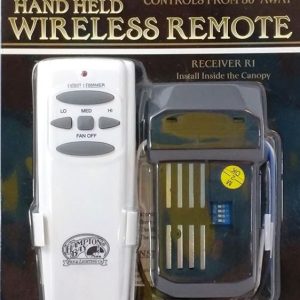
Hampton Bay Portable Ceiling Fan Remote Control
$55.00 Buy Hampton Bay Portable Ceiling Fan Remote Control -
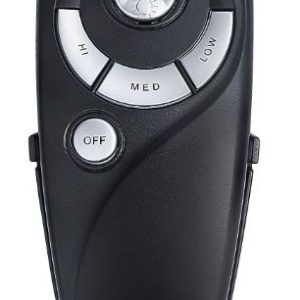
Hampton Bay UC7083T Remote
$20.00 Buy Hampton Bay UC7083T Remote -
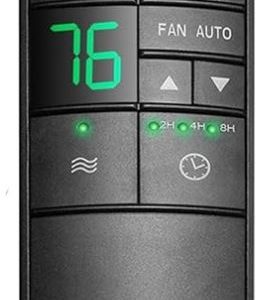
Hampton Bay Universal Ceiling Fan Thermostatic Remote Control Kit for HD3 TR222A 98108 98130 98101 98131
Read more -
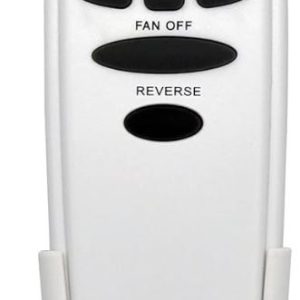
HD6 Replacement Remote for Hampton Bay Hunter Ceiling Fan Remote Control
$16.00 Buy HD6 Replacement Remote for Hampton Bay Hunter Ceiling Fan Remote Control -
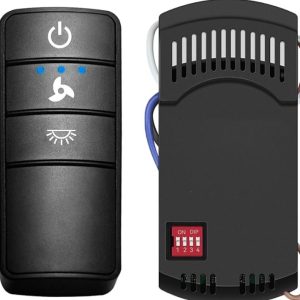
Universal Hampton Bay Hunter Harbor Breeze Remote
$36.00 Buy Hampton Bay Hunter Harbor Breeze Remote