
A broken ceiling fan glass globe is one of the more frustrating replacement jobs because it looks simple on the surface — it’s just a piece of glass — but getting the wrong one means it either doesn’t fit the light kit at all, or it fits loosely and rattles, or the opening is the wrong size for the bulb you’re using. The single most important measurement when buying a replacement globe is the fitter diameter: the opening at the top of the globe that seats into the light kit. This measurement is what most people skip, and it’s the reason most failed globe purchases happen. This guide covers how to measure correctly, what the common sizes are across major fan brands, the different globe styles available, why globes break and how to prevent it, and how to install a replacement without cracking it in the process.
The Most Important Measurement: Fitter Size
The fitter is the rim or collar at the opening of the globe — the part that inserts into or sits against the light kit holder. Fitter diameter is measured across the opening of the globe at its widest point, and it needs to match the receiver in your light kit precisely. The three most common fitter sizes in ceiling fan light kits are 2-1/4 inches, 3-1/4 inches, and 4 inches, though some older or specialty fans use other sizes. A globe with a 2-1/4 inch fitter will not seat properly in a 3-1/4 inch holder and vice versa — the size difference is large enough that there’s no makeshift fix.
To measure your existing globe or the light kit receiver, use a ruler or tape measure across the inside diameter of the opening — not the outside edge of the rim, but the actual hole. If you’re measuring the light kit receiver rather than an existing globe, measure the inside diameter of the hole the globe fitter sits into. On most ceiling fan light kits the fitter is held in place by two or three small thumbscrews that tighten against the globe’s neck — this is a different attachment method from the twist-and-lock used on some fixtures, and it means fitter diameter is really the only measurement that determines fit, since the thumbscrews can accommodate some variation in neck thickness.
The overall globe size — height and maximum width — doesn’t affect whether the globe fits the fixture, but it does affect appearance and whether the globe clears nearby fan components. On close-clearance light kits where the globe sits very near the motor housing or blade brackets, a globe that’s wider or taller than the original can create a clearance problem even if the fitter fits perfectly. When in doubt, measure the original globe’s overall height and maximum diameter before ordering.
Globe Styles and What They’re Used For
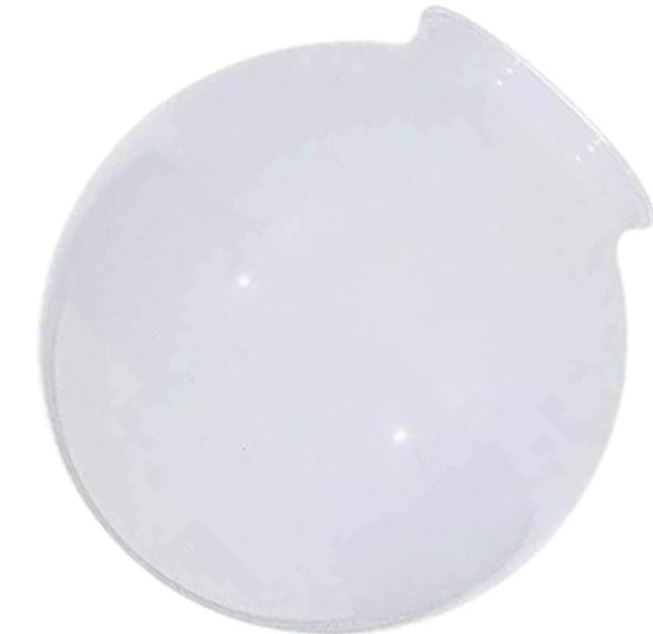
Ceiling fan light kits use several distinct globe shapes, and while they can sometimes be mixed aesthetically, matching the original style keeps the fan looking intentional. The most common shape is the round or onion globe — a nearly spherical form that’s widest at the middle and tapers to the fitter at the top. These are the default on a huge proportion of mid-range ceiling fans across Hampton Bay, Harbor Breeze, Hunter, and similar brands. They diffuse light evenly in all directions and work in most room contexts. Frosted glass versions soften the light significantly compared to clear glass, which matters when the bulb is visible through the globe at eye level from seated positions in the room.
Tulip or bell globes taper outward from the fitter before curving back in, creating a shape closer to an inverted flower. These tend to appear on more traditionally styled fans and direct more light downward than a round globe does, since the lower portion of the globe is wider and less obstructed. They’re a common shape on fans from the 1990s and early 2000s and are still widely available as replacements. Schoolhouse globes are cylindrical with a rounded bottom and a relatively narrow, defined fitter rim — these are associated with vintage and industrial aesthetics and are less common on mass-market ceiling fans but very common on pendant and sconce fixtures, which means replacement options are plentiful through lighting suppliers.
Dome or bowl shades — which are open at the bottom rather than enclosed — are technically glass shades rather than globes, but they’re used on many ceiling fan light kits and the two terms get used interchangeably in product listings. The practical difference is that an open-bottom shade exposes the bulb from below, which creates brighter, more directional light but less diffusion and no protection from accidental contact. Many people prefer the look of an open shade for a cleaner, more contemporary appearance, and they have the practical advantage of making bulb replacement easier since you don’t need to remove the entire shade to access the socket. The fitter measurement and attachment mechanism work the same way as enclosed globes.
Glass Types and Finishes
Standard frosted white glass is the most common ceiling fan globe material and the easiest to source in replacement sizes. The frosting is achieved either by sandblasting the exterior surface or by acid etching, and there’s a visible quality difference between the two — acid-etched glass has a finer, more even texture and transmits light more consistently, while sandblasted glass can have a slightly grainier appearance, though in practice this rarely matters once the globe is installed and lit. What does matter is the consistency of the frosting: a globe with uneven frosting will show hot spots where the bulb is visible through thinner areas, which looks noticeably worse with LED bulbs than it did with incandescent, since LEDs have a much smaller, brighter light source.
Alabaster glass is an opaque white glass with a slightly warmer, creamier tone than standard frosted glass. It’s used on higher-end fans and gives a softer, more diffused quality of light than standard frosted. Because it’s denser, it transmits less total light, so a fan that was adequately bright with alabaster globes may feel noticeably dimmer if you replace them with standard frosted glass of the same dimensions. If you’re replacing broken alabaster globes and matching the appearance matters, it’s worth specifically searching for alabaster replacement globes rather than assuming any white frosted globe will look the same.
Tinted and art glass globes — amber, green, blue, or multi-color — are used on decorative and specialty fans. These are harder to source as replacements because the specific color and texture are often unique to a manufacturer or product line. For fans with distinctive art glass that’s no longer in production, the practical options are either to find a used original on eBay or through ceiling fan salvage sources, or to replace the entire light kit with one that uses a more commonly available globe style. Mixing art glass globes of slightly different colors on a multi-globe light kit is visually obvious and generally not a satisfying repair.
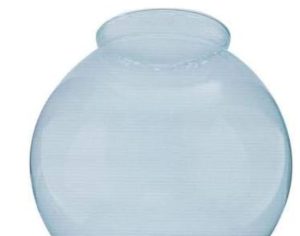
For smaller ceiling fan light kits and fixtures requiring a 3-inch fitter, the Dysmio Lighting 3-inch frosted glass globe is a widely available aftermarket option. Its frosted finish provides even light diffusion and it fits the standard 3-inch fitter found on many entry-level and mid-range ceiling fan light kits.
Brand-Specific Globe Sizing: What Fits What
Hampton Bay and Harbor Breeze ceiling fans — both sold through Home Depot and Lowe’s respectively — predominantly use 2-1/4 inch fitter globes across their mid-range residential lines, which is the most common size in the market and the easiest to find replacements for. Hunter fans vary by model and era: older Hunter fans from the 1990s and early 2000s often used proprietary globe designs that seat differently from standard fitter styles, sometimes using a collar or rim that’s integral to the light kit rather than a simple thumbscrew holder. If you have an older Hunter fan and a standard replacement globe won’t seat correctly, the attachment mechanism rather than the fitter size is likely the issue — Hunter light kit globes from this era often require a globe with a specific rim profile rather than just a matching fitter diameter.
Casablanca fans tend to use larger, more design-specific globes that are harder to replace with generic options — Casablanca’s light kits are often integral to the fan’s design concept rather than interchangeable modules, and replacement globes for specific Casablanca models are best sourced through authorized dealers rather than general lighting suppliers. Kichler ceiling fan globes are similarly more design-specific, and matching the original finish and style matters more for Kichler fans than it does for mass-market brands because the aesthetic cohesion is part of what you paid for. For any discontinued fan model where the original globe is no longer available, the realistic option is either finding a close match in overall size and fitter diameter and accepting a slightly different look, or replacing the complete light kit with a current model that uses commonly available globes.
Why Ceiling Fan Globes Break
The most preventable cause of ceiling fan globe breakage is over-tightening during installation. The thumbscrews that hold globes in place need to be snug — enough to prevent movement and vibration — but not fully torqued down. Glass doesn’t compress the way a rubber gasket does, and when a thumbscrew is over-tightened it creates a stress concentration at the contact point that can crack the globe immediately or leave it vulnerable to cracking later from a much smaller secondary cause like a minor vibration or temperature change. Finger-tight plus about a quarter turn is the correct approach for most thumbscrew globe holders, not “as tight as I can get it.”
Vibration from an unbalanced fan is a slow but consistent cause of globe damage. Each rotation of an unbalanced fan transmits a small shock through the motor and into the light kit, and over thousands of rotations this cyclic loading fatigues the glass at the stress points — usually at the fitter rim where the thumbscrews contact the globe. A globe that cracks at the neck without any obvious impact is often telling you the fan needs blade balancing more than it needs a new globe. Fixing the balance before installing the replacement prevents the same failure recurring.
Thermal stress is a less common but real cause of breakage on fans in specific locations. A fan near a skylight or south-facing window where the globe receives direct sunlight during part of the day can experience significant temperature cycling as the glass heats in sun and cools when shaded, and this expansion and contraction stresses the glass over time particularly if the globe is held rigidly at the fitter with tight thumbscrews. In these locations, keeping the thumbscrews slightly less tight and ensuring the globe can expand fractionally reduces thermal stress cracking. Light bulb heat is also a contributor — incandescent and halogen bulbs run hot enough that the glass interior of a globe can exceed 200°F, creating a thermal gradient between the interior and exterior surfaces. LED bulbs run dramatically cooler and are worth using in any ceiling fan globe application both for their efficiency and for the reduction in thermal stress on the glass.
Installing a Replacement Globe Without Breaking It
Turn off power at the wall switch and give the existing light kit a few minutes to cool if the fan has been running — handling a globe that’s been holding heat from a bulb with cold hands can create a thermal shock in thin glass. If the original globe broke in place, wear work gloves when removing any remaining glass fragments, and inspect the fitter holder carefully for any glass shards caught in the thumbscrew threads before inserting the new globe.
Before inserting the new globe, check that the thumbscrews are backed out far enough that the globe can seat fully without resistance — trying to push a globe past a partially-extended thumbscrew is how replacements get cracked during installation. Lower the globe into the holder and ensure it’s fully seated and level before tightening anything. Tighten each thumbscrew evenly rather than fully tightening one before touching the others, working around the globe in sequence the same way you’d torque lug nuts on a wheel. Stop tightening when there’s no movement in the globe — there should be no wobble, but the glass should not be under visible stress from the screws bearing into it. Run the fan at low speed before stepping up, and check that there’s no vibration in the globe before walking away.
Where to Find Replacement Ceiling Fan Glass Globes
For standard 2-1/4 inch fitter globes in common shapes — round, tulip, dome — Home Depot and Lowe’s both carry a reasonable selection in their ceiling fan parts sections, and this is a fast option if you need something quickly and the style doesn’t have to match exactly. For a specific style, size, or finish match, online lighting suppliers carry substantially broader selections: sites specializing in lighting parts (rather than general home improvement retailers) will typically have dozens of options across each fitter size. Amazon carries a wide range of replacement globes with fitter size listed in the product specifications, which makes it practical to search by the measurement you’ve taken rather than by fan brand.
For brand-specific replacements — particularly Casablanca, Hunter vintage models, Kichler, or any fan with proprietary globe attachment — start with the manufacturer’s parts line or an authorized dealer before searching generic sources. For discontinued fans where the original globe is no longer in production, eBay is genuinely useful for finding new-old-stock or salvaged originals. Searching by the fan’s model number along with “globe” or “glass shade” often surfaces listings from people parting out identical fans. Ceiling fan enthusiast forums and Facebook groups focused on vintage or specific-brand fans are also a practical resource for discontinued parts, since collectors often know which cross-reference parts from other manufacturers fit correctly.