Harbor Breeze
Harbor Breeze is Lowe’s house brand for ceiling fans, which tells you a lot about what it is and what it isn’t before you ever look at a product. It isn’t an independent manufacturer with decades of engineering heritage and a dedicated parts distribution network. It is a private label line manufactured primarily by Litex Industries out of Grand Prairie, Texas, sold exclusively through Lowe’s stores and Lowes.com, positioned to give Lowe’s a competitive answer to what Hampton Bay does for Home Depot. The comparison is apt. Both brands occupy the accessible end of the ceiling fan market, both are sold exclusively through a single major retail chain, and both have enough volume behind them that replacement parts and accessories are broadly available even if the support infrastructure doesn’t have the depth of an independent premium brand. Harbor Breeze has been selling fans through Lowe’s since the 1990s, and in that time it has developed into one of the more widely purchased ceiling fan brands in North America — not because it offers the best fans money can buy, but because it offers a reliable, well-styled, accessible fan for buyers who need something that works well and looks good without spending more than the situation calls for.
The product range Harbor Breeze maintains across the Lowe’s lineup is genuinely broad, spanning from basic builder-grade fans in the fifty to eighty dollar range that contractors use to outfit new residential construction all the way up to more substantial mid-range fans with integrated LED lighting, remote controls, and DC motors approaching the two hundred and fifty to three hundred dollar tier. Within that range there is real variation in quality — the budget end of the Harbor Breeze lineup is priced and built to a price point, and the construction reflects that honestly, while the upper end of the range produces a fan that performs noticeably better and holds up noticeably longer than the entry-level models. Understanding where on that spectrum a specific Harbor Breeze fan sits is one of the more useful things you can do before purchasing, and it’s information that the model number and price point communicate fairly directly once you know what to look for.
Harbor Breeze Remote Controls and Why So Many People Need Replacements
Remote controls are the most commonly searched Harbor Breeze replacement part, and the reasons for that are the same ones that drive remote searches for Hampton Bay and Hunter fans — remotes get lost, receivers fail over time, and a meaningful number of Harbor Breeze fans were sold as pull-chain-only models that later owners want to upgrade to remote operation. The Harbor Breeze remote ecosystem shares significant compatibility overlap with Hampton Bay and Hunter remotes because all three brands draw from the same pool of remote and receiver technology, primarily built around the UC7078T, UC7222T, and related receiver families that have become the de facto standard across mid-range residential ceiling fans. This overlap is good news for Harbor Breeze owners looking for replacement remotes, because it means the replacement market is large, the prices are competitive, and universal options that cover Harbor Breeze alongside other compatible brands are widely available.
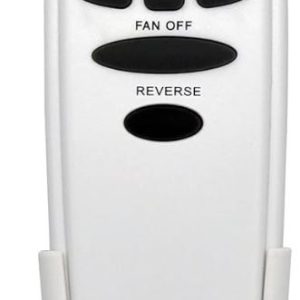
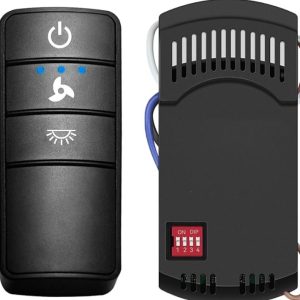
The two products listed on this page reflect that cross-brand compatibility directly. The HD6 Replacement Remote covers a remote family that spans Harbor Breeze, Hampton Bay, and Hunter fans using the HD-series receiver configuration — one of the more widely distributed remote setups in the residential ceiling fan market. The Universal Hampton Bay Hunter Harbor Breeze Remote is the broadest-compatibility option, designed to work across all three brands for buyers who want a reliable replacement without needing to nail down the exact model-specific remote their receiver was paired with originally. Both products pair with existing receivers via DIP switch matching, which is the same process that applies to any radio frequency ceiling fan remote replacement and that takes about ten minutes once you understand what you’re doing.
The DIP switch matching process is straightforward but frequently misunderstood, and a clear explanation of it prevents the most common frustration in ceiling fan remote replacement. Both the remote transmitter and the receiver inside the fan’s canopy contain a row of small physical switches — typically four of them — that must be set to the same combination for the remote to communicate with the receiver. Replacement remotes arrive with the switches in a default position that may or may not match the combination set on your existing receiver. If the positions don’t match, the remote appears completely unresponsive regardless of battery condition or product quality. The fix is to open the battery compartment of the new remote, compare the switch positions to what you see on the receiver inside the canopy with the power off at the breaker, and set them to match. This resolves the issue in the vast majority of cases. If the remote still doesn’t respond after confirmed matching switch positions, the receiver itself may have failed — in which case a complete kit that includes a new receiver is the appropriate next step.
Parts Availability for Older Harbor Breeze Models
One of the practical realities of buying a house-brand ceiling fan is that the parts support ecosystem depends on decisions made by the retailer rather than by an independent manufacturer with a long-term investment in the brand’s service history. For Harbor Breeze, that means parts availability is solid for current and recent models stocked at Lowe’s, manageable for models discontinued within the last several years, and increasingly challenging for older fans that have been out of production long enough that Lowe’s and Litex Industries have moved on. This is a genuine limitation compared to brands like Casablanca that maintain deep parts inventories for products decades old, and it’s worth factoring into the purchase decision for anyone who expects to keep a fan for a long time and rely on manufacturer support down the road.
The practical workaround for most Harbor Breeze parts needs is the cross-brand compatibility that the remote and receiver ecosystem provides. Because Harbor Breeze fans use the same standard remote and receiver technology as Hampton Bay and Hunter fans, the replacement market for compatible remotes and receivers is much larger than what Harbor Breeze’s own parts infrastructure would provide in isolation. A Harbor Breeze fan whose original remote is lost or whose receiver has failed after ten years can typically be brought back to full remote functionality with a universal kit that is currently in production and widely available — the fan’s age doesn’t strand you the way it would if the remote system were fully proprietary. Light kits, replacement blades, and other model-specific components are a different story and require more research, which is why documenting your fan’s model number at purchase and keeping it somewhere findable is one of the most useful things you can do as a Harbor Breeze owner.
Litex Industries maintains a customer support line that is the most direct path to model-specific parts sourcing for Harbor Breeze fans — more direct than calling Lowe’s, which adds a layer of retail customer service between you and the actual parts knowledge. When a specific Harbor Breeze part is what you need and the Lowe’s website and Amazon searches aren’t turning it up, calling Litex directly with your fan’s model number is the step that most often resolves the search in the shortest time. The model number is printed on a label on the motor housing, typically visible once the canopy is removed, and it is the single most important piece of information for navigating Harbor Breeze’s parts and support ecosystem effectively.
Where to Buy Harbor Breeze Fans and Replacement Parts
Lowe’s is the primary and official source for Harbor Breeze ceiling fans and branded replacement parts, both in-store and through Lowes.com. For buyers purchasing a new Harbor Breeze fan, buying through Lowe’s provides access to the full current lineup, Lowe’s return policy, and the most straightforward warranty support path. Amazon carries a significant selection of Harbor Breeze compatible replacement parts and third-party alternatives, and for remote replacements specifically the Amazon marketplace is often the most convenient source given the cross-brand compatibility options available there. The two remote products listed on this page link directly to purchase options that cover the most common Harbor Breeze remote replacement scenarios — whether you’re replacing a lost HD-series remote or need a universal option that works across Harbor Breeze, Hampton Bay, and Hunter fans without requiring model-specific sourcing.
Showing all 2 results