
The Fasco Parlour Model 938 shares the late 1970s to early 1980s origin story of the Parlour 952 and reflects the same design philosophy of mechanical sophistication over decorative simplicity. Where many ceiling fan manufacturers of the period were focused on getting an attractive product to market quickly, Fasco was applying motor engineering discipline to the ceiling fan category with a thoroughness that distinguished its products from the broader market. The Parlour 938 demonstrates this discipline through its double claw hook mounting system, its two-speed pull chain with variable speed control, and the forward and reverse switch that provides seasonal directional adjustment.
The 938 and 952 model numbers both fall within the Parlour series, and the two fans share the core design philosophy while differing in specific mechanical details that reflect either different production batches, different intended installation contexts, or the natural variation that occurs when a manufacturer is developing a product line rather than producing a single fixed design. Understanding what distinguishes the 938 from the 952 requires attention to those mechanical specifics, particularly the mounting system and the variable speed control configuration, since these are the details that most clearly separate the two models for collectors and enthusiasts who work with both.
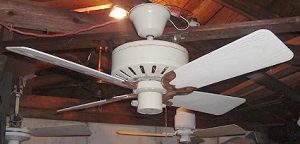
The Double Claw Hook Mounting System
The double claw hook mounting system on the Parlour 938 is the most distinctive identifying feature of this model and the detail that most immediately differentiates it from other Fasco fans. Where the Parlour 952 uses a J-Hook and the Charleston series uses a ball and socket system, the 938 uses a double claw configuration that grips the mounting point with two hook elements rather than one. This double claw approach provides a more secure connection than a single hook and distributes the mechanical load across two contact points rather than one, which may have been relevant in installation contexts where vibration or dynamic loading was a concern.
The double claw hook is a less common mounting system in vintage American ceiling fans generally, which makes the 938 an interesting mechanical artifact beyond its operational qualities. Most collectors with experience across the American vintage ceiling fan space will have encountered J-Hook and ball and socket systems frequently, but the double claw hook is unusual enough that it serves as an immediate identification marker for the 938 when examining a Fasco fan without access to the model number or documentation. If you see a Fasco fan with a double claw hook, you are looking at a Parlour 938.
The bell canopy on the 938 covers the double claw hook mounting hardware in the same way that the bell canopy on the 952 covers the J-Hook. The canopy form is consistent across the Fasco lineup, providing visual continuity even when the underlying mounting hardware differs significantly between models. This design consistency through the canopy is a marker of coherent product line thinking rather than ad hoc design, and it suggests that Fasco’s product development team had a clear visual identity for the brand that they maintained across model variants.
Two-Speed Pull Chain and Variable Speed Control on the Parlour 938
The two-speed pull chain on the Parlour 938 operates differently from the levolier pull chain on the 952, reflecting either a design refinement or a parallel design approach serving different speed control preferences. The 938’s pull chain provides two speed positions, and the variable speed control functions on the second speed position rather than the first, which is the reverse of the 952’s configuration. This difference in which speed position works with the variable control affects how the fan is operated in practice, since users need to pull to the second position to engage variable control rather than using the first position as they would on the 952.
The variable speed control itself provides the same fine-grained adjustment within the applicable speed range that the 952 offers, and the operational result is similar: a fan capable of running at genuinely very slow speeds that the simple three-position pull chain of the Charleston series cannot achieve. This variable speed capability is the defining operational feature of the Parlour series and the primary reason that commercial and discriminating residential users preferred Parlour fans to the simpler speed selection systems of other manufacturers.
The forward and reverse switch on the top side of the motor housing is consistent with the Parlour series design across the 938 and 952. Mounting the switch on the top of the motor housing rather than on the side or bottom reflects an ergonomic choice that makes the switch accessible when reaching up to the motor housing from below, since the top surface is the most naturally reachable point when the fan is at standard ceiling height. The switch position also keeps it out of the direct line of sight from below, maintaining the clean visual profile of the motor housing as seen from the room.
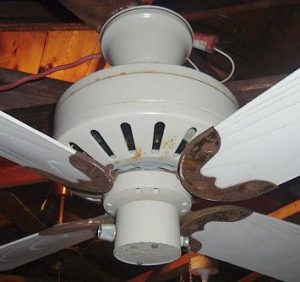
Late 1970s Ceiling Fan Engineering and the Parlour Series Design Philosophy
The Parlour 938, like the 952, reflects the ceiling fan engineering priorities of the late 1970s in a way that subsequent decades did not preserve. The late 1970s designer who specified a ceiling fan for a quality residential or commercial installation was working in a market where mechanical sophistication was a genuine differentiator and where variable speed control represented a meaningful technological advancement over simple switched speed selection. Fasco’s decision to invest in this sophistication rather than pursuing the simpler and cheaper three-position pull chain approach reflects a product strategy oriented toward quality rather than market share.
This design philosophy has implications for how the Parlour 938 wears and ages compared to simpler Fasco fans. The additional components in the speed control system create additional potential failure points, and the double claw hook mounting system requires correct installation to function as designed. A Parlour 938 that has been well maintained and correctly installed will outperform simpler fans in operational sophistication, while a Parlour 938 that has been poorly maintained or incorrectly serviced may show problems that a simpler fan would not. The mechanical complexity is inseparable from the operational sophistication.
The Fasco engineering approach to the variable speed control on the Parlour series was not the only approach available in the late 1970s ceiling fan market. Casablanca’s Slumber-Quiet system used a different technology to achieve similar results, and the existence of multiple approaches in the market reflects the fact that variable speed control was a recognized customer requirement but that the optimal technical implementation had not yet been settled. The Fasco Vari-Low system that appears on later models represents Fasco’s refinement of the variable speed approach, and the evolution from the Parlour 938’s control system to the Vari-Low reflects ongoing development rather than a static design.
Identifying a Parlour 938 Among Other Fasco Fans
The double claw hook mounting system is the most reliable visual identifier for the Parlour 938 in the field. When examining a Fasco fan for identification purposes, confirming the presence of the double claw hook immediately narrows the identification to the 938 within the Fasco lineup, since no other documented Fasco model uses this specific mounting configuration. This makes field identification significantly simpler than identifying some other Fasco variants that differ from their siblings primarily in finish details or minor hardware specifications.
Beyond the mounting system, the pull chain type and speed control configuration can be used to confirm the identification. The 938 uses a regular two-speed pull chain rather than the levolier pull switch of the 952, and the variable speed works on the second speed position. These details require accessing the fan’s operation to confirm, but they provide a secondary layer of identification that supports the mounting system observation.
Documentation through the vintageceilingfans.com gallery provides the best available photographic reference for the Parlour 938, and collectors who encounter a potential 938 in the field should compare it against the gallery documentation before committing to an identification. The gallery photographs show sufficient detail of the mounting hardware, motor housing, and canopy to support a confident identification of genuine examples and to flag fans that may have been mislabeled or that represent related but distinct models.
Collector Market Position of the Fasco Parlour 938
The Parlour 938 occupies a similar position in the collector market to the Parlour 952, appearing less frequently than Charleston variants but more often than the ultra-rare Olde South or Spartan Electric re-labels. Collectors who have built Charleston collections and are looking to expand into the earlier Fasco design history find the Parlour series a natural next step, and the 938 and 952 together provide a more complete picture of the Parlour series than either model does alone.
The distinct mounting system of the 938 gives it particular interest for collectors focused on the mechanical diversity of the American vintage ceiling fan market. The double claw hook is unusual enough to be genuinely interesting from a hardware perspective, and collectors who maintain complete fan specimens with original mounting hardware can display the 938’s double claw as a specific mechanical artifact that represents a technical approach not found in most other vintage American fans.
Condition assessment for the 938 follows the same general framework as for other Fasco fans, with special attention to the variable speed control and the double claw mounting hardware. The variable speed control should provide smooth operation across its range, and the double claw should be intact and undamaged. Replacement of the double claw hardware with non-original mounting components would significantly reduce the 938’s collector value and should be disclosed by any seller who is aware of it.
Operating and Maintaining a Parlour 938 Today
A Fasco Parlour 938 in good condition is an operationally impressive fan that demonstrates what American ceiling fan manufacturing achieved at the quality end of the market in the late 1970s. The variable speed control provides a range of air movement from genuinely very slow through high speed that few contemporary fans can match for smoothness and quiet operation. The forward and reverse switch allows seasonal adaptation to winter warm-air recirculation without requiring access to the pull chain or any other control beyond the housing-mounted toggle.
Maintenance priorities for the 938 include the variable speed control as the most complex and most service-prone component, followed by the pull chain switch and the motor capacitor as the standard Fasco maintenance items. The double claw mounting hardware should be inspected for any signs of deformation or stress cracking that might indicate an installation problem or impact damage, since mounting hardware integrity is fundamental to the safe operation of any ceiling fan.
Installing a Fasco Parlour 938 in a Modern Home
Installing a Parlour 938 today involves the same fundamentals as any ceiling fan installation, with a few considerations specific to the age of the fan and the double claw hook mounting system that defines this model. The first and most important step before touching any wiring is confirming that the ceiling electrical box is rated for fan use. A standard light fixture box is not rated for the dynamic load a spinning ceiling fan produces, and a 40-plus year old fan installed into an undersized box is a safety problem regardless of how well the motor itself performs. If the box is not fan-rated, replacing it with a rated fan box before proceeding is the correct first step and not an optional one.
The double claw hook on the 938 requires a compatible mounting point in the ceiling box. The hook wraps around a crossbar or mounting bracket in the box, and the crossbar needs to be secure and correctly positioned to accept both claws evenly. If you are installing the 938 into a box that previously held a different fan with a different mounting system, check that the crossbar hardware in the box is compatible with the double claw geometry before committing to the installation. A crossbar that is too narrow or positioned incorrectly will not allow both claws to seat properly, which affects both the stability of the installation and the hang angle of the fan.
Wiring the 938 follows standard ceiling fan practice. The fan’s black wire connects to the hot feed from the wall switch, the white wire connects to the neutral, and the ground connects to the ground in the ceiling box. If the original wiring from the 938 shows any cracking, brittleness, or insulation degradation from age, it should be replaced before the fan is put into service. Older wiring insulation that has become brittle can crack and expose conductors in ways that are not immediately visible but that create fire risk under the heat generated by normal motor operation. Replacing deteriorated lead wires with new wiring of the correct gauge and insulation type is a straightforward job that removes this risk entirely.
Once the hook is seated and the wiring is connected, the bell canopy slides up to cover the box and the mounting hardware. The canopy on the 938 is held in position by the fan’s own weight pulling down on the hook, so there is no separate canopy fastener to contend with in most configurations. Check that the canopy sits flush against the ceiling with no gap around its perimeter, which confirms that the hook is seated correctly and the fan is hanging at the intended angle. A gap on one side of the canopy indicates that the claw hook is not evenly engaged and the mounting position should be adjusted before the fan is put into operation.
With the fan hanging and the canopy seated, attach the blade irons to the motor housing at the mounting points and then attach the blades to the blade irons. The blade iron angle is fixed by the design of the 938 and should not require adjustment. Attach all blades before powering the fan, then restore power at the breaker and test the pull chain through both speed positions and the variable speed control across its range. A fan that starts cleanly on both pull chain positions and runs smoothly through the variable speed range with no hunting or surging is ready for regular service. If the fan hesitates to start or runs unevenly, the capacitor is the most likely cause and should be tested and replaced as needed before the installation is considered complete.
The Fasco Parlour Model 938 is a ceiling fan that rewards both collectors and users with mechanical sophistication that reflects the best of its era. Its distinctive mounting system, its variable speed control capability, and its position in the early history of Fasco’s residential ceiling fan production all contribute to a significance that goes beyond any individual operational feature. For collectors building a comprehensive picture of American vintage ceiling fan manufacturing, the Parlour 938 is a necessary and rewarding piece.