
If you own a Fasco ceiling fan or are considering buying one secondhand, you’ve discovered a piece of American manufacturing history. The F.A. Smith Company, known as FASCO, produced some of the highest-quality residential ceiling fans made in America during the 1970s through early 1990s. While FASCO stopped making residential ceiling fans decades ago, thousands of these durable fans still operate in homes across the country—a testament to their exceptional build quality.
This comprehensive guide covers everything you need to know about Fasco ceiling fans: their history, what made them special, common models, maintenance requirements, troubleshooting tips, where to find replacement parts, and whether a vintage Fasco fan is still worth owning in 2026.
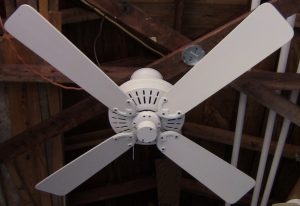
The Complete History of F.A. Smith Manufacturing Company (FASCO)
The Early Years: From Auto Parts to Electric Fans (1911-1933)
The F.A. Smith Manufacturing Company began in Rochester, New York in 1911—not as a fan company, but as a manufacturer of aftermarket automobile accessories. In the early days of automotive manufacturing, cars were sold as basic transportation with minimal features. F.A. Smith filled this gap by producing add-on accessories that car owners wanted but automakers didn’t include:
- Interior dome lights
- Decorative flower vases that hung from door sections
- Dashboard accessories
- Various convenience items for the new “horseless carriages”
As automobile manufacturers began including these accessories as standard equipment in the 1920s, F.A. Smith lost their primary market and had to pivot their business model.
The Fan Manufacturing Era Begins (1933-1955)
In 1933, facing declining demand for automotive accessories, F.A. Smith introduced their first electric fan—an 8-inch model powered by a motor of their own design. This diversification proved successful, and the company rapidly expanded their fan line.
By 1935, they introduced their first oscillating fan model. A year later, in 1936, F.A. Smith offered a complete line of stationary and oscillating fans ranging from compact 8-inch models to powerful 16-inch fans. They also developed a more robust motor design specifically to power their larger 16-inch fans.
During this period, F.A. Smith manufactured fans under multiple brand names to target different market segments:
- Arctic-Aire (their most recognized brand)
- Royal Rochester (emphasizing their Rochester, NY heritage)
- Spartan (marketed as durable, no-frills models)
- Viking (positioned as premium fans)
- King Kool (budget-friendly line)
All of these brands were manufactured at the Rochester plant. By the late 1930s, F.A. Smith had become one of the largest fan manufacturers in the United States—a position they would maintain for three decades.
The FASCO Era and Ceiling Fan Production (1948-1990s)
In 1948, F.A. Smith Manufacturing Company officially changed their name to FASCO (a contraction of their original name). This coincided with post-war expansion and modernization of their product lines.
In 1955, FASCO relocated fan production from Rochester, New York to a new, modern manufacturing facility in Fayetteville, North Carolina. This move positioned them closer to southern markets where ceiling fans remained popular year-round.
Entry Into Ceiling Fans (1970s):
The 1970s energy crisis created renewed interest in ceiling fans as an energy-efficient alternative to air conditioning. While FASCO had manufactured portable desk and floor fans for decades, they recognized the opportunity in the residential ceiling fan market.
During the 1970s, FASCO began producing residential ceiling fans featuring their proprietary K55-type motor—a “stack motor” design that became the industry standard for American-made ceiling fans. These were high-quality, American-manufactured fans designed to compete with established brands like Hunter, Casablanca, and Emerson.
FASCO ceiling fans were sold through various channels:
- Independent lighting and electrical suppliers
- Regional home improvement stores
- Specialty ceiling fan retailers
- Some department stores
Unlike mass-market brands sold at Sears or big-box retailers, FASCO fans were typically found at smaller, specialized dealers where quality mattered more than rock-bottom pricing.
The End of an Era: Sale to Patton and Beyond (Early 1990s-Present)
In the early 1990s, as American ceiling fan manufacturing faced increasing pressure from cheaper imports, FASCO made the strategic decision to exit the residential ceiling fan market. They sold their ceiling fan division to Patton, another American fan manufacturer.
Patton continued producing some Fasco designs under the Patton brand for several years, maintaining the quality and specifications that made FASCO fans popular. However, by the late 1990s, the economics of American ceiling fan manufacturing had shifted dramatically:
- Imported fans from Asia cost 50-75% less than American-made models
- Even basic American fans sold for $200-500 while imported fans rarely exceeded $150
- Manufacturing costs in the U.S. made it nearly impossible to compete on price
FASCO’s corporate parent recognized that their core competency—precision electric motors—remained valuable in industrial and HVAC applications. In 2003, FASCO became part of Tecumseh Products Company, continuing under the FASCO name as a global leader in fractional horsepower motors for HVAC systems.
Today, FASCO remains in business as one of the world’s largest manufacturers of motors for:
- Commercial HVAC systems
- Industrial ventilation equipment
- Appliance motors
- Draft inducer motors for furnaces
- Commercial exhaust fans
While they no longer produce residential ceiling fans, FASCO motors are found in countless commercial and industrial applications worldwide.
What Made Fasco Ceiling Fans Special?
Fasco ceiling fans earned a reputation for exceptional quality during their production run. Here’s what set them apart:
1. The K55-Type Stack Motor
The heart of every FASCO ceiling fan was their proprietary K55-type stack motor. This motor design featured:
Stack Motor Construction:
- Stator and rotor assembly designed specifically for ceiling fan applications
- Oil-lubricated bearings (not sealed ball bearings like cheaper models)
- Heavy-duty windings capable of decades of continuous operation
- Excellent heat dissipation preventing motor burnout
- Efficient power consumption despite high torque output
The K55 motor was based on FASCO’s decades of experience manufacturing electric motors for industrial applications. Unlike cheaper motors that failed after 3-5 years, properly maintained FASCO motors regularly operated for 30-40 years or longer.
Why “Stack” Motor?
The term “stack” refers to the motor construction method where the stator (stationary windings) and rotor (rotating component) are “stacked” vertically. This design allowed FASCO engineers to create a compact, powerful motor that fit within the fan’s motor housing while generating sufficient torque to spin large (52-56 inch) fan blades at effective speeds.
2. Metal Flywheel Construction (Most Models)
FASCO ceiling fans primarily used metal flywheels—the hub that connects the fan blades to the motor shaft. Metal flywheels offered significant advantages over rubber or plastic alternatives:
- Greater durability (metal doesn’t degrade with age like rubber)
- Better balance (metal can be machined to precise tolerances)
- Heat resistance (metal doesn’t warp from motor heat)
- Longer service life (decades vs. 10-15 years for rubber)
Exception: Models with more than 4 blades (typically 5 or 6-blade designs) sometimes used rubber flywheels to absorb vibration from the additional blade weight. These rubber flywheels are now a known weak point in aging FASCO fans and may require replacement.
3. American Manufacturing Quality
FASCO ceiling fans were manufactured entirely in the United States using:
- American-made motors
- Domestically sourced metal components
- Quality control standards exceeding imported fans
- Proper assembly by trained workers (not rushed overseas production)
This translated to:
- Tight tolerances (less wobble and vibration)
- Consistent build quality unit-to-unit
- Fans that could be disassembled, serviced, and rebuilt
- Motors that could run continuously for decades
4. Simple, Repairable Design
FASCO engineers designed their ceiling fans to be serviceable. Unlike modern sealed units, FASCO fans featured:
- Accessible motor housings that could be opened
- Bearings that could be oiled or replaced
- Standard electrical components (capacitors, switches)
- Modular construction allowing parts to be swapped
This repairability meant that a FASCO fan could be maintained indefinitely if the owner was willing to perform basic maintenance or hire an electrician familiar with vintage fans.
5. Innovative Features (For Their Time)
Many FASCO ceiling fans included advanced features:
Variable Speed Control (“Vari-Low” System):
Some higher-end FASCO models featured a Vari-Low variable speed control instead of traditional pull chains or wall switches. This system provided:
- Smooth, infinite speed adjustment (not just 3 fixed speeds)
- Solid-state electronic control
- Quieter operation at lower speeds
- Precise airflow control
The Vari-Low system was sophisticated for its era but has become a maintenance challenge. The electronic components can fail, causing the fan to only work on high speed. Repairing Vari-Low controls is difficult as replacement parts are no longer manufactured.
Blade Tilt Design:
Some FASCO models featured blades with an intentional “up-tilt” angle relative to the vertical axis. This design choice:
- Increased the area of the room receiving direct airflow
- Improved air circulation at the room’s edges
- Made the fan more effective in larger rooms
- Created a wider cone of airflow
The tradeoff was reduced airflow concentration directly beneath the fan, but for most applications, the improved whole-room circulation was beneficial.
Common Fasco Ceiling Fan Models
While comprehensive model documentation is limited (FASCO didn’t maintain the detailed records that brands like Hunter did), several model series are frequently encountered:
Several specific Fasco models have been documented in detail and are worth exploring individually. The Fasco Charleston 452 is the most commonly encountered Fasco ceiling fan in the collector market, produced across multiple generations through the early to mid 1980s with a characteristic ball and socket mounting system and a notably slow low speed setting that made it popular in commercial and residential settings alike. The Fasco Charleston Model 438 is a close sibling to the 452 that shares the same mechanical platform and design language while carrying a distinct internal model designation. For collectors interested in the earlier and more mechanically sophisticated end of the Fasco lineup, the Fasco Parlour Model 938 ceiling fan is a late 1970s design featuring a distinctive double claw hook mounting system and a two-speed pull chain with variable speed control that predates the simpler Charleston speed control arrangement.
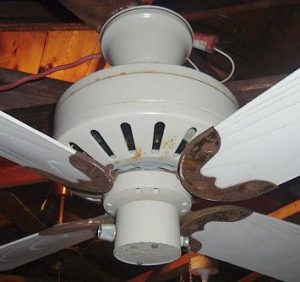
Standard 4-Blade Models (Most Common)
The majority of FASCO ceiling fans produced were traditional 4-blade models available in various sizes:
Specifications:
- Blade spans: 42″, 48″, 52″ (most common)
- Motor: K55-type stack motor
- Flywheel: Metal (typically)
- Speeds: 3 (High, Medium, Low) via pull chain or wall control
- Finish options: White, Antique Brass, Polished Brass, Bronze
- Blade finishes: Oak, Walnut, White, various wood tones
These workhorse fans were simple, reliable, and represented the core of FASCO’s residential ceiling fan business.
5 and 6-Blade Premium Models
FASCO produced multi-blade models targeting buyers who wanted:
- More sophisticated appearance
- Smoother airflow (more blades = less “chopping” effect)
- Quieter operation at higher speeds
- Upscale aesthetic
Key Difference:
Most 5 and 6-blade FASCO models used rubber flywheels instead of metal. The rubber helped absorb vibration from the additional blade weight, preventing motor stress and reducing noise.
The Rubber Flywheel Challenge:
Rubber degrades over time, especially when exposed to:
- Motor heat (decades of operation)
- Ozone in the air
- Temperature cycling
- Mechanical stress
After 25-35 years, rubber flywheels commonly crack, split, or disintegrate. When this happens:
- The fan blades wobble severely
- The motor may make grinding or knocking sounds
- Blades can become dangerously loose
- The fan must be stopped and repaired
Replacement rubber flywheels are difficult to find but specialized ceiling fan parts dealers occasionally stock NOS (new old stock) FASCO flywheels or can recommend universal replacements that can be adapted.
Florentine Series (Decorative Line)
The FASCO Florentine was a decorative ceiling fan series featuring:
- Ornate blade designs with scrollwork
- Premium finish options
- Light kit integration
- More elaborate motor housing styling
- Higher price point than standard models
Florentine fans were marketed toward buyers furnishing formal dining rooms, master bedrooms, or upscale homes where the fan’s appearance mattered as much as function.
Florentine-Specific Issue:
Florentine models used rubber flywheels that are particularly prone to cracking. When searching for replacement parts, specify “Florentine” as the flywheels may have unique mounting dimensions.
Gulf Stream Series (Large Commercial/Residential)
FASCO produced Gulf Stream models designed for large spaces:
Features:
- 50-56 inch blade spans
- More powerful motors
- Commercial-grade construction
- Suitable for high ceilings (10-14 feet)
- Often used in restaurants, waiting rooms, large living areas
Gulf Stream fans were built heavier and more robust than residential models. Many are still in service in commercial settings after 30-40 years.
American Spirit Series
The American Spirit line was FASCO’s patriotic-themed series featuring:
- Red, white, and blue color schemes
- Stars and stripes motifs
- Americana styling
- Popular in the 1980s
These are now sought after by collectors of vintage Americana decor.
Industrial/Commercial Heat Cycler Fans
FASCO also manufactured industrial ceiling fans for commercial applications:
Specifications:
- Straight metal blades (no decorative curves)
- 56″ diameter typical
- Designed to run continuously
- Used in warehouses, factories, gymnasiums
- Heat cycling capabilities (reverse mode to push warm air down in winter)
These industrial models sometimes appear on the secondhand market and can be adapted for residential use in workshops, garages, or spaces with high ceilings.
Common Problems with Aging Fasco Ceiling Fans
Even the best-built ceiling fans develop issues after 30-50 years of operation. Here are the most common problems with FASCO fans and how to address them:
1. Rubber Flywheel Deterioration (5-6 Blade Models)
Symptoms:
- Excessive wobbling even after balancing
- Grinding or knocking sounds from the motor
- Blades feel loose at the hub
- Visible cracks in the black rubber flywheel
Solution:
The flywheel must be replaced. This requires:
- Removing the fan from the ceiling
- Disassembling the motor housing
- Removing the blade arms from the old flywheel
- Installing blade arms on the new flywheel
- Reassembling and remounting
Finding Replacement Flywheels:
- Check specialized ceiling fan parts websites (efanparts.com and similar)
- Search eBay for “FASCO flywheel” or “FASCO rubber flywheel”
- Contact vintage ceiling fan restoration specialists
- Some universal flywheels can be adapted with minor modifications
Expect to pay $40-80 for a NOS FASCO flywheel if you can find one.
2. Vari-Low Speed Control Failure
Symptoms:
- Fan only works on high speed regardless of control setting
- No response to speed adjustment
- Control feels loose or unresponsive
- Burning smell from control unit
Problem:
The Vari-Low solid-state speed control contains electronic components (triacs, capacitors, resistors) that can fail with age. Heat stress from decades of operation degrades these components.
Solution Options:
Option A: Replacement (Difficult)
Finding original Vari-Low controllers is nearly impossible. A specialized ceiling fan repair shop might be able to source a used unit, but availability is extremely limited.
Option B: Conversion to Standard Control
Many owners convert Vari-Low fans to standard 3-speed controls:
- Remove the Vari-Low control unit
- Install a standard capacitor-based speed control
- Rewire the fan for 3-speed operation
- Install a new wall switch or use pull chains
This requires electrical knowledge or hiring an electrician. The trade-off is losing the infinite speed adjustment, but you regain a working, reliable fan.
Option C: Universal Remote Control Conversion
Modern universal ceiling fan remote control kits can sometimes be adapted to FASCO fans:
- Install a receiver unit in the fan canopy
- Wire it to the motor
- Use the remote for speed control
- Provides modern convenience (remote operation)
Brands like Hampton Bay, Hunter, and Harbor Breeze sell universal remote kits ($25-60) that work with many older fans. One user successfully installed an Emerson RCK55 remote kit on their FASCO fan.
3. Dry or Worn Bearings
Symptoms:
- Squeaking, squealing, or grinding noises
- Fan runs slower than it used to
- Motor feels hot to touch
- Fan struggles to start
Problem:
FASCO motors use oil-lubricated sleeve bearings. Over decades, the oil dries out or becomes contaminated with dust/dirt. The bearings develop friction, causing noise and reduced performance.
Solution: Bearing Maintenance
For Oil Ports (if present):
- Locate oil ports on top of the motor housing (small holes with removable plugs)
- Clean around the ports
- Add 3-5 drops of electric motor oil (SAE 20 non-detergent or ISO 32 turbine oil)
- Rotate the fan blades by hand to distribute the oil
- Wipe away excess oil
- Repeat annually
For Sealed Units Without Oil Ports:
Some FASCO fans have sealed motor housings without external oil ports. For these:
- Remove the fan from the ceiling
- Open the motor housing (requires removing screws)
- Locate the bearings at top and bottom of the motor shaft
- Apply oil directly to the bearings
- Rotate the motor shaft to work oil into the bearings
- Reassemble
This is more involved but can restore a noisy FASCO fan to whisper-quiet operation.
When to Replace Bearings:
If oiling doesn’t resolve the noise and the bearings feel rough when you rotate the motor shaft by hand, the bearings themselves are worn and need replacement. This requires:
- Disassembling the motor
- Pressing out old bearings
- Pressing in new bearings (must match original dimensions)
- Reassembly
This is best left to an electric motor repair shop or experienced DIYer with proper tools.
4. Capacitor Failure
Symptoms:
- Fan won’t start (hums but doesn’t spin)
- Fan starts slowly or inconsistently
- One or two speeds don’t work
- Burning smell from motor area
Problem:
The run capacitor stores and releases electrical energy to help the motor start and run efficiently. Capacitors fail with age, especially after decades of heat cycles.
Solution:
Replace the capacitor. This is one of the easiest ceiling fan repairs:
- Turn off power at the breaker
- Remove the fan’s switch housing or canopy (capacitor is usually here)
- Note the capacitor’s specifications (marked on its body): microfarads (µF), voltage rating
- Disconnect wires (take photos first)
- Remove old capacitor
- Install new capacitor with matching specifications
- Reconnect wires as photographed
- Reassemble and test
Capacitor Specifications:
FASCO ceiling fans typically used capacitors rated:
- 3-5 µF (microfarads) for most residential models
- 250-300V AC rating
- CBB61 type (standard ceiling fan capacitor)
Where to Buy:
Replacement capacitors cost $8-15 from:
- Grainger Industrial Supply
- Online HVAC parts suppliers
- Amazon (search “ceiling fan capacitor”)
- Local electrical supply houses
Important: Always replace with a capacitor that matches or slightly exceeds the original voltage rating. Never use a lower voltage rating.
5. Wobbling and Balance Issues
Symptoms:
- Fan wobbles during operation
- Light fixtures shake
- Ceiling mount feels loose
- More pronounced at higher speeds
Problem:
Wobbling can result from multiple causes:
- Warped or unbalanced blades
- Loose blade mounting screws
- Loose motor housing
- Improper ceiling mount installation
- Flywheel issues (rubber flywheel deterioration)
- Bent blade arms
Solution Process:
Step 1: Tighten Everything
- Turn off the fan
- Tighten all blade arm screws at the flywheel
- Tighten screws attaching blades to blade arms
- Check that motor housing is secure to downrod
- Verify ceiling mounting bracket is tight
Step 2: Check Blade Alignment
Use a ruler or tape measure to measure from ceiling to the tip of each blade. All measurements should be within 1/4 inch. If a blade sits higher or lower:
- The blade arm may be bent (can sometimes be gently straightened)
- The blade itself may be warped (replace if wooden blades are cupped)
- Mounting screws may not be fully seated
Step 3: Balance the Fan
If tightening and alignment don’t fix wobbling:
- Purchase a ceiling fan balancing kit ($5-10)
- Use the clip to test each blade position
- Move the clip from blade to blade, running the fan at medium speed between tests
- When you find the blade position that minimizes wobble, tape a balancing weight to that blade
- Adjust weight position along the blade length for best results
Step 4: Check for Rubber Flywheel Issues
If wobbling is severe and gets worse over time, inspect the rubber flywheel for cracks. A deteriorating flywheel cannot be balanced—it must be replaced.
Where to Find Fasco Ceiling Fan Replacement Parts in 2026
Finding parts for 30-40 year old ceiling fans requires knowing where to look:
1. Specialized Ceiling Fan Parts Dealers
eFanParts.com (www.efanparts.com)
This website specializes in parts for vintage and discontinued ceiling fan brands including FASCO. They stock:
- Flywheels (metal and rubber)
- Capacitors
- Switch housings
- Pull chains and switches
- Mounting hardware
- Some motor parts
Call them with your model number for availability.
2. Generic Parts Suppliers
Many FASCO components are generic and available from multiple sources:
For Capacitors:
- Grainger.com (industrial supplier)
- Repair Clinic (www.repairclinic.com)
- Amazon
- Local electrical supply houses
For Bearings:
- Bearing specialty shops (search “bearing supply” + your city)
- Online industrial suppliers
- Electric motor repair shops can often source correct bearings
For Switches and Pull Chains:
- Most hardware stores carry generic ceiling fan switches
- Home Depot, Lowe’s (ceiling fan parts aisle)
- Online electrical suppliers
3. FASCO Motor Parts (Not Ceiling Fan Specific)
Since FASCO still manufactures motors, you can sometimes find:
- Replacement motors (if dimensions match)
- Capacitors
- Motor mounting hardware
However, FASCO’s current product line focuses on HVAC and commercial applications, so residential ceiling fan parts are not part of their catalog.
4. eBay and Online Marketplaces
eBay Search Strategies:
- “FASCO ceiling fan parts”
- “FASCO flywheel”
- “FASCO ceiling fan motor”
- “Vintage ceiling fan parts”
- “FASCO [specific model number] parts”
Occasionally, someone dismantles a FASCO fan and lists parts individually. You might find:
- Complete motors
- Flywheels
- Blade sets
- Light kits
- Control switches
5. Vintage Ceiling Fan Restoration Specialists
A handful of businesses specialize in restoring vintage ceiling fans:
- They sometimes have FASCO parts inventory
- They can fabricate custom parts if you can’t find originals
- They offer restoration services if you don’t want to DIY
Search for “vintage ceiling fan restoration” + your state to find specialists.
6. Ceiling Fan Repair Shops
Local ceiling fan installation and repair businesses sometimes:
- Have bins of parts from old jobs
- Know where to source hard-to-find parts
- Can adapt universal parts to fit FASCO fans
- Offer repair services
Call around to shops that have been in business 20+ years—they’re more likely to be familiar with FASCO fans.
Is a Vintage Fasco Ceiling Fan Worth Keeping in 2026?
If you already own a working FASCO ceiling fan or are considering buying one secondhand, here’s an honest assessment:
Reasons TO Keep a Fasco Fan:
1. Exceptional Build Quality
FASCO fans were built to industrial standards. A well-maintained FASCO motor can outlast 2-3 modern imported fans. If you value durability and longevity, FASCO fans deliver.
2. Repairable Design
Unlike sealed modern fans designed to be replaced rather than repaired, FASCO fans can be:
- Disassembled for maintenance
- Repaired with generic parts (capacitors, bearings)
- Rebuilt completely if needed
For people who prefer repairing things rather than throwing them away, FASCO fans are ideal.
3. American Manufacturing Heritage
Some homeowners value American-made products and the superior quality they represent. FASCO fans are genuine American manufacturing from the era when “Made in USA” meant something.
4. Quieter Operation (When Properly Maintained)
The oil-lubricated bearings in FASCO motors, when properly oiled, run quieter than the ball bearings in many modern fans. At low and medium speeds, a well-maintained FASCO is whisper-quiet.
5. Already Installed
If you already have a working FASCO ceiling fan installed, there’s no compelling reason to replace it with a modern fan. With basic maintenance (oiling, occasional capacitor replacement), it will likely outlast you.
6. Cost-Effective If Free or Cheap
If you inherit a FASCO fan or find one at a yard sale for $20-40, it’s worth having, especially if it works. You’re getting a premium-quality fan for the price of a budget import.
Reasons NOT to Buy a Fasco Fan in 2026:
1. Limited Parts Availability
While generic parts (capacitors, bearings) are available, specific components like:
- Rubber flywheels
- Vari-Low controls
- Specific blade arms or housings
…are difficult or impossible to find.
2. Age-Related Maintenance Requirements
A 30-40 year old ceiling fan will need:
- Bearing oiling (annually)
- Eventual capacitor replacement
- Possible flywheel replacement
- Possible motor overhaul
If you’re not handy or willing to hire occasional repairs, a modern fan with a warranty is easier.
3. Lacks Modern Features
FASCO fans don’t have:
- Remote controls (unless retrofitted)
- Reverse/summer/winter switching (most models)
- Energy-efficient DC motors
- LED light kits
- Smart home integration
Modern ceiling fans offer convenience features that FASCO fans never had.
4. Energy Consumption
FASCO’s AC motors consume more electricity than modern DC motor ceiling fans. The difference isn’t enormous (maybe $10-20/year per fan), but it adds up over decades.
5. Finding a Working Unit is Challenging
If you don’t already have one, finding a FASCO ceiling fan in good working condition requires:
- Searching estate sales, thrift stores, architectural salvage
- Buying sight-unseen on eBay (risky)
- Hoping someone local is selling one
Most FASCO fans still in service will stay with current owners who appreciate their quality.
6. No Warranty or Support
If you buy a used FASCO fan and it fails shortly after installation, you have no recourse. You’re buying a 30-40 year old appliance with zero warranty.
The Bottom Line on Fasco Fans Today:
If you currently own a working FASCO ceiling fan: Keep it and maintain it. With proper care (annual oiling, replacement capacitors as needed), it will likely continue operating for decades. The build quality exceeds nearly all modern ceiling fans under $300.
If you’re considering buying a used FASCO fan: Only do so if:
- It’s very cheap ($50 or less)
- You can test it before buying
- You’re comfortable with basic repairs
- You appreciate vintage quality and are willing to maintain it
If you need a new ceiling fan installed: Buy a modern ceiling fan with a warranty. Modern fans offer:
- Remote controls
- Better energy efficiency
- Easier installation
- Warranty support
- Available replacement parts
The nostalgia and quality of a FASCO fan is appealing, but practicality favors modern options for new installations.
Maintaining Your Fasco Ceiling Fan: Annual Service Checklist
If you own a FASCO fan, following this annual maintenance routine will keep it running smoothly for decades:
Annual Maintenance (Every 12 Months):
1. Lubricate Bearings (15 minutes)
- Turn off power at breaker
- If oil ports are accessible: Add 3-5 drops of electric motor oil to each port
- If no oil ports: Disassemble housing and oil bearings directly
- Rotate fan manually to distribute oil
- Wipe away excess oil
2. Clean Fan Blades (10 minutes)
- Use a damp microfiber cloth
- Wipe both sides of each blade
- Remove dust, grease, and grime
- Dry thoroughly
3. Tighten All Screws (10 minutes)
- Blade-to-blade arm screws
- Blade arm-to-flywheel screws
- Motor housing screws
- Downrod connection
- Ceiling mount screws
4. Inspect Electrical Connections (5 minutes)
- Check that wire connections are tight
- Look for signs of overheating (discolored wires)
- Verify capacitor looks good (no bulging, leaking)
5. Test All Speeds (5 minutes)
- Run fan on each speed setting
- Listen for unusual noises
- Check for wobbling
- Verify normal operation
Every 3-5 Years:
Replace Capacitor (even if it seems to work)
Capacitors degrade over time. Replacing every 3-5 years prevents unexpected failure.
Every 10-15 Years:
Deep Motor Service
- Complete disassembly
- Bearing inspection and possible replacement
- Deep cleaning of motor components
- Rewiring if necessary
- Repaint/refinish if desired
Fasco vs. Other Vintage American Ceiling Fan Brands
If you’re interested in vintage American ceiling fans, here’s how FASCO compares to other brands from the same era:
Fasco vs. Hunter (Original Series)
Hunter Advantages:
- Better-known brand with longer production history
- More models and sizes available
- Better parts availability (Hunter still manufactures fans)
- More consistent design aesthetic
FASCO Advantages:
- Comparable build quality
- Often quieter operation
- Less expensive on the secondhand market (Hunter fans command premium prices)
- More utilitarian/less decorative (pro or con depending on preference)
Verdict: Hunter has the advantage of current production and parts support. FASCO matches Hunter’s quality but parts are harder to find.
Fasco vs. Casablanca
Casablanca Advantages:
- Premium brand with luxury styling
- Highest-end materials and finishes
- Sought after by collectors
- Very smooth, quiet operation
FASCO Advantages:
- More affordable (then and now)
- Easier to service (simpler design)
- Parts are equally difficult to find for both brands
- More practical, less ornamental
Verdict: Casablanca is the luxury choice; FASCO is the practical, workhorse choice.
Fasco vs. Emerson
Emerson Advantages:
- Invented the stack motor used by FASCO and others
- Wide variety of models
- Still-recognizable brand name
- Some parts overlap with FASCO
FASCO Advantages:
- Arguably better-built motors
- More conservative designs (age better stylistically)
- Less prone to flywheel issues
Verdict: Very similar quality; personal preference matters more than objective superiority.
Fasco vs. NuTone
NuTone Advantages:
- Integrated with home intercom systems (unique feature)
- Sleek, modern designs for the era
- Often included premium light kits
FASCO Advantages:
- More traditional styling
- Simpler design (fewer things to break)
- Better parts availability
Verdict: NuTone offered more features but FASCO’s simplicity makes long-term ownership easier.
The Legacy of Fasco Ceiling Fans
F.A. Smith Company / FASCO represents an important chapter in American manufacturing history. From their origins making automobile accessories in 1911, through their decades as one of America’s largest fan manufacturers, to their eventual exit from the residential ceiling fan market in the 1990s, FASCO embodied American industrial quality.
Their ceiling fans, produced from the 1970s through early 1990s, set a standard for durability that few modern fans match. The K55-type stack motor, metal flywheel construction, and repairable design philosophy created ceiling fans that were built to last generations—and thousands continue operating 30-50 years later.
While FASCO no longer makes residential ceiling fans, their legacy lives on in:
- The thousands of FASCO fans still spinning in homes across America
- The industrial motors they continue manufacturing for HVAC systems worldwide
- The influence their designs had on the ceiling fan industry
- The standard they set for American manufacturing quality
If you’re fortunate enough to own a FASCO ceiling fan, maintain it properly and it will likely outlast the house it’s installed in. And if you’re considering buying a used FASCO fan, understand that you’re acquiring a piece of American manufacturing history—a fan built when “Made in USA” meant uncompromising quality designed to last a lifetime.
Will a FASCO ceiling fan work in 2026? Absolutely—with proper maintenance.
Should you buy one? If you appreciate quality, durability, and American manufacturing history, and you’re willing to perform occasional maintenance, then yes.
Will it outlast a modern ceiling fan? In most cases, emphatically yes.
The FASCO ceiling fan story is ultimately about quality that endures. In an era of planned obsolescence and disposable products, FASCO fans remind us that some things were simply built better—and built to last.
I have an Fasco ceiling fan and controls are burned out and I converted to six-speed fan with new items for the control as replacement, I used Emerson RCK55 on it and make them weird because the motor is DC and used an control and reverse switch on fan is useless and replaced with reverse module works great