
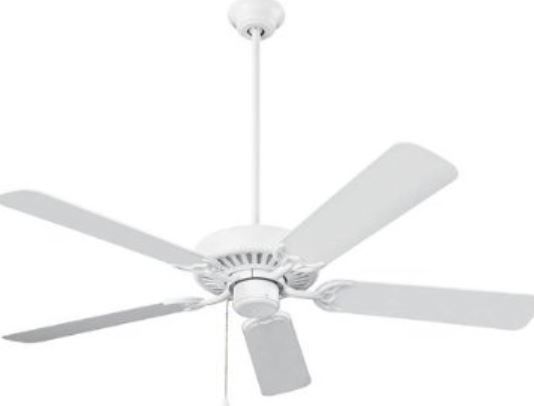
Nutone manufactured ceiling fans from 1979 through the late 1990s, establishing themselves as a respected name in residential ventilation and comfort products during an era when ceiling fans were experiencing a major resurgence in American homes. Their ceiling fan line represented a significant diversification from their core business of bathroom exhaust fans, range hoods, and intercom systems, bringing the same focus on quality and reliability that had made their other products household staples. The Nutone ceiling fan journey spanned nearly two decades and produced several distinct model lines, each with its own characteristics, strengths, and quirks that owners and repairers need to understand today as these fans continue operating in homes across the country.
The Friction Drive Era: Early Nutone Fans From 1979
The earliest Nutone ceiling fans, introduced in 1979, used a distinctive friction drive motor system that set them apart from most competitors but also created some challenges that would affect their long-term reputation. This friction drive design employed a rubber or composite wheel that made direct contact with the motor shaft to transfer rotational energy to the fan blades — an approach that was simpler and potentially cheaper to manufacture than traditional direct-drive systems. However, this friction drive mechanism proved to be the Achilles heel of these early models, generating significantly more noise than conventional ceiling fan motors as the friction wheel made contact with the spinning shaft. The operational sound ranged from a noticeable hum to an outright grinding noise depending on the condition of the friction components and how much wear they had experienced.
Beyond the noise issue, these friction drive motors are largely not repairable today because replacement parts simply are not available anymore, and the specialized nature of the design means you cannot easily substitute components from other manufacturers. If you own one of these early friction drive Nutone fans and the motor fails or becomes intolerably noisy, your realistic options are either replacing the entire fan or living with the noise, as tracking down original friction drive components has become nearly impossible decades after production ceased.
The Conventional Motor Generation: 1980s Models
Following those problematic early models, Nutone pivoted to more conventional motor designs in their subsequent ceiling fan releases throughout the 1980s and into the 1990s. These later models used quality motors manufactured overseas, likely in Taiwan or other Asian manufacturing centers that were producing the majority of ceiling fan motors during this period. The shift to conventional motors represented a significant improvement in reliability, noise levels, and serviceability compared to the friction drive generation. These motors employed standard permanent split capacitor (PSC) designs that were proven, reliable, and used readily available components that could be serviced or replaced when necessary.
The performance characteristics of these overseas-manufactured motors were solid — they ran quietly, moved air effectively, and proved durable enough that many are still operating today, three or four decades after installation. Nutone’s quality control on these imported motors appears to have been reasonably good, as failure rates were acceptable and the motors generally lived up to expectations for mid-range residential ceiling fans of that era.
The Premium Tier: American-Made Motors and the K55 Design
The crown jewel of Nutone’s ceiling fan lineup was their top-of-the-line model, which distinguished itself by using motors manufactured right here in America rather than relying on overseas production. These premium Nutone fans employed motors based on the highly regarded K55 design, produced by Universal Electric, a respected American motor manufacturer known for quality and durability. The K55 motor design was essentially an industry standard for quality ceiling fan applications, offering excellent torque characteristics, efficient operation, and legendary reliability that made it a favorite among ceiling fan enthusiasts and professionals.
By incorporating these American-made Universal Electric motors into their flagship model, Nutone was making a clear statement about quality and performance, positioning these fans as premium products worthy of the higher price points they commanded. The K55-copy motors featured robust construction with quality bearings, proper thermal protection, and electrical characteristics that allowed smooth, quiet operation across all speed settings. Owners of these top-tier Nutone models with Universal Electric motors often report decades of trouble-free service, with the motors continuing to run smoothly long after lesser fans have been replaced. If you own one of these American-made motor Nutones, you have a fan that is genuinely worth maintaining and repairing rather than replacing.
General Reliability and What to Expect From These Fans
Despite the generally sound engineering and quality construction of Nutone ceiling fans, there really is not much that can go wrong with these units under normal operating conditions — they are mechanically simple devices with relatively few failure points. The motor, capacitor, switches, and bearings represent essentially the entire list of components that might require attention over the fan’s lifetime. This simplicity is actually one of Nutone’s strengths, as it means these fans can operate reliably for decades with minimal maintenance, and when problems do occur, they are usually straightforward to diagnose and repair.
The robust construction and quality components mean that catastrophic failures are rare. You are much more likely to experience gradual performance degradation or a specific component failure that can be addressed individually rather than requiring complete fan replacement. This serviceability has allowed many Nutone fans to remain in operation long past their expected service life, still cooling rooms efficiently decades after installation.
The Capacitor Problem: A Known Manufacturing Issue
One specific issue has plagued Nutone ceiling fans across multiple model years and appears to stem from a manufacturing quality control problem rather than a design flaw. Nutone apparently received and installed a bad batch of capacitors in numerous fans during a particular production period, and these defective capacitors have failed at rates far higher than normal, affecting owners across the country. The capacitor is a critical component in permanent split capacitor motors, providing the phase shift necessary for the motor to start and run properly. When a capacitor fails, symptoms can include the fan refusing to start, running slowly regardless of speed setting, humming without turning, or exhibiting intermittent operation.
The prevalence of capacitor failures in Nutone fans suggests systematic issues with either the capacitor supplier or storage conditions that degraded the components before or shortly after installation. Fortunately, capacitor replacement is a relatively straightforward repair that most homeowners with basic electrical knowledge can handle, and replacement capacitors with the correct specifications are readily available from electrical supply houses and online retailers. Our ceiling fan capacitor troubleshooting and replacement guide walks through the process of safely discharging the old capacitor, removing it from the motor assembly, identifying the correct replacement specifications, and installing the new component to restore proper operation.
The Safety Recall: What Affected Owners Need to Know
Another significant issue affecting certain Nutone ceiling fan models involves the ceiling mount hardware itself, which was subject to an official safety recall due to concerns about structural failure. Some Nutone fans used ceiling mounting systems that were determined to pose safety risks under certain conditions, potentially leading to the fan becoming detached from the ceiling — an obviously dangerous scenario that could result in property damage or personal injury. The recall creates a frustrating situation for owners because there is no retrofit kit or direct replacement mounting hardware available that would allow you to safely retain the existing fan while addressing the safety concern. This means affected fans should be removed and replaced entirely rather than attempting to engineer a workaround or continue using a potentially dangerous mounting system.
You can check your specific fan against the official recall records at the Consumer Product Safety Commission recall database. The model number is typically found on a label affixed to the motor housing, and cross-referencing it against the CPSC database will confirm whether your fan is affected.
Bearing Maintenance and What to Do When Things Get Noisy
As with virtually all older ceiling fans regardless of manufacturer, Nutone fans will eventually experience bearing-related issues as a natural consequence of age and accumulated operating hours. The bearings that support the motor shaft and blade assembly will gradually lose lubrication, accumulate dirt and debris, or develop wear that affects smooth operation. Symptoms of bearing problems include increased noise such as grinding, squeaking, or rattling sounds, vibration or wobbling during operation, difficulty starting, or the motor running hot during use.
The good news is that bearing maintenance is often straightforward and can extend the life of a Nutone fan significantly. Some Nutone motors use sealed bearings that are not designed for user maintenance, but many models feature oil ports or accessible bearing surfaces that can be serviced with a few drops of lightweight electric motor oil or dedicated ceiling fan lubricant. Heavier oils or greases should be avoided, as they create excessive drag and attract more dirt over time. In cases where bearings are severely worn or damaged rather than just dry, bearing replacement may be necessary, though this is a more involved repair that requires partial motor disassembly.
Rubber Flywheel Degradation in Early 1990s Models
Early 1990s Nutone models introduced another potential failure point through their use of rubber or composite flywheels in the motor assembly. These flywheels served to smooth operation and reduce vibration, but the rubber material degrades over time due to heat exposure, ozone, and simple aging of the polymer compounds. As these rubber flywheels deteriorate, they can become brittle, develop cracks, lose material, or completely disintegrate, leading to vibration, noise, imbalanced operation, or even complete failure if flywheel fragments interfere with motor operation.
Finding exact replacement flywheels for specific Nutone models can be challenging given the age of these fans and the discontinuation of the product line, but in some cases generic or aftermarket flywheels can be adapted to work, or creative repairs using modern rubber compounds or composites can restore functionality. Our broken flywheel repair and replacement guide covers how to identify flywheel deterioration, safely disassemble the motor to access the flywheel, and source or fabricate replacement components. This is admittedly one of the more involved repairs for Nutone fans because it requires more extensive disassembly and may involve some creative problem-solving when exact replacement parts are no longer available.
Are Nutone Ceiling Fans Worth Keeping?
The combination of generally solid construction, repairable design, and the availability of information about common issues means that Nutone ceiling fans remain viable, serviceable fixtures decades after their manufacture. While you will not find new Nutone ceiling fans on store shelves today — the company exited the ceiling fan market in the late 1990s — the installed base of these fans continues providing reliable service in countless homes. For homeowners who own Nutone fans, particularly the higher-quality models with American-made motors, investing time and modest expense in maintenance and repair often makes more sense than replacing them with modern fans that may not match the build quality or longevity of these older units.
The wealth of information available from ceiling fan enthusiast communities, vintage appliance repair forums, and general DIY resources means that even less common Nutone-specific issues can usually be diagnosed and addressed with some research and persistence. These are fans that were built in an era when residential appliances were expected to last, and with proper attention, many of them will continue delivering exactly that.